

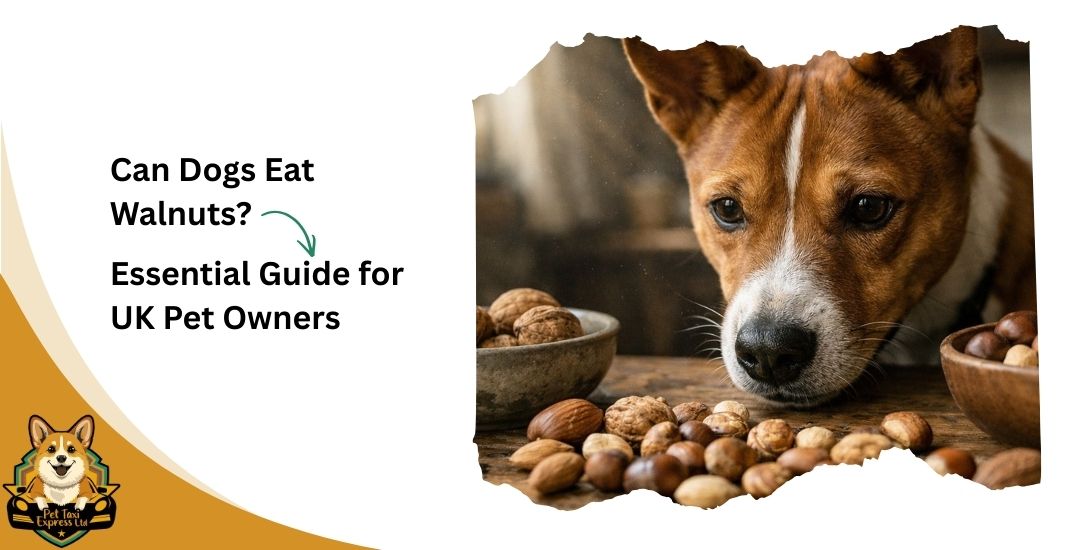
As a dog owner in the UK, you might wonder, can dogs eat walnuts? The short answer is no, it’s best to avoid them altogether. Walnuts pose several risks to our canine friends, from digestive upset to serious health issues. While a tiny nibble might not cause immediate harm, the potential dangers outweigh any benefits.
In this blog, we’ll explore why can dogs eat walnuts is a question worth answering carefully, backed by vet advice and research. We’ll also cover safer treats and what to do if your dog sneaks one.
Can Dogs Eat Walnuts Safely?
Pet lovers often ask, Can dogs eat walnuts safely? The answer is No! Vets advise against it due to high fat content and toxicity risks. English walnuts might seem harmless in small bits, but they can lead to pancreatitis or choking. Black walnuts are outright toxic, causing severe stomach issues.
Building on that, let’s dive deeper. Walnuts are nutrient-rich for humans, with omega-3s and antioxidants. But dogs process food differently. Their digestive systems aren’t built for such fatty nuts. Even unsalted, plain walnuts can overwhelm a pup’s pancreas.
According to the American Kennel Club, just a handful could trigger life-threatening inflammation. In the UK, where people love sharing snacks with pets, it’s tempting to offer a treat. Yet, restraint keeps tails wagging happily.
Why Are Walnuts Risky for Dogs?
Walnuts top the list of nuts to skip for pups. First, there’s the fat factor. These nuts are loaded with oils that sound healthy but can upset a dog’s gut. Over time, this leads to weight gain or worse, pancreatitis. This condition inflames the pancreas, causing pain, vomiting, and lethargy. Vets in the UK see it often from “people food” indulgences.
Next, toxicity looms large. Black walnuts, common in some UK gardens or imports, contain juglone which is a natural toxin. It irritates the stomach lining, sparking diarrhoea and vomiting. Even English walnuts, our grocery staple, harbour dangers if mouldy. Fungi like Aspergillus produce aflatoxins, which attack the liver. Symptoms escalate fast: tremors, seizures, even organ failure. The Pet Poison Helpline notes thousands of calls yearly on nut mishaps.
Don’t forget physical hazards. Whole walnuts or shells? Choking nightmares. They can lodge in throats or block intestines, needing emergency surgery.
As we ponder whether dogs can eat walnut scenarios, remember portion size matters. A curious sniff might end fine, but greed turns toxic.
Types of Walnuts: Which Ones to Avoid?
Not all walnuts spell doom equally. English walnuts are the “safer” sort. Still, can dogs eat nuts walnuts like these? In a small amount, if at all. They’re calorie-dense, with 654 calories per 100g, per USDA data. That’s a tummy bomb for a 10kg dog.
Black walnuts? Hard pass. Native to North America but popping up in UK wilds or stores, they pack juglone punch. One fallen nut from a tree could sideline your spaniel for days. Symptoms hit within hours including drooling, weakness, bloody stools. Rush to the nearest emergency vet in such a situation.
Then, mouldy ones lurk everywhere. Humid UK storage invites fungi. Penitrem A from Penicillium mould causes neurological chaos: staggering, fits. Even seasoned or candied walnuts (add salt or chocolate) can lead to double trouble. Chocolate’s theobromine is infamous for heart racing and seizures.
In everyday chats, folks ask, can dogs eat walnuts UK style? Local vets always advise sticking to dog-formulated foods. No need for experiments that can potentially hurt your furry friend.
What Happens If Your Dog Eats a Walnut?
Catching problems early can save your dog a lot of discomfort. If your dog eats walnuts, watch for signs like vomiting or loose stools. In mild cases, your pup might feel better within a day if you feed a simple diet like boiled chicken and rice. But if the symptoms don’t go away or get worse, it’s best to visit the vet right away.
Severe reactions vary. For black walnuts; abdominal cramps, dehydration are common symptoms. For Mould poisoning? Fever, jaundice.
In such a situation, act fast. Withhold food, offer water to your pet. In the UK, contact RSPCA or your GP vet. Many dogs recover with IV fluids and medicines.
Safer Treat Alternatives for Your Dog
Instead of giving walnuts to your pet, replace them with some other nutritious snacks. Such as carrots. They add crunch with vitamin A boost. Apples (cored, no seeds) freshen breath of pets. And Blueberries pack antioxidants, fighting free radicals.
For a nut-like texture, try pumpkin seeds, ground fine. Or commercial treats with peanut butter-unsalted, xylitol-free. Vets endorse green beans for fibre, aiding digestion.
Building a Walnut-Free Home
Proof your space: elevate counters, use lidded bins. Educate families about potential hazards of walnuts. Grandkids love sharing, but teach them not to share walnuts with dogs.
Get the Best Pet Transport Services in the UK
Pets need safe and secure transport to move in the UK. To provide reliable transport for your furry companion, Pet Taxi UK offers stress-free journeys. We specialise in safe, comfortable rides customised according to your dog’s needs. Our drives provide security, climate-controlled comfort, and are driven by experienced handlers who understand pet anxiety. From London to Liverpool, our fleet covers every corner with punctual pickups and gentle handling.
Book today with Pet Taxi to give your pup the VIP treatment they deserve!
FAQs
Can a dog eat a walnut?
In tiny amounts, maybe, but it’s risky. Watch for tummy upset or worse. Better skip it for safer snacks.
What will happen when a dogeats walnuts?
The symptoms usually appear within a few hours. Walnut ingestion can cause vomiting, diarrhea, or choking hazards. Walnut can also block throats needing emergency surgery.
What should you do if your dog eats a walnut?
Watch for vomiting or loose stools. In mild cases it usually passes with a simple diet like boiled chicken and rice. But if symptoms persist, see your vet.